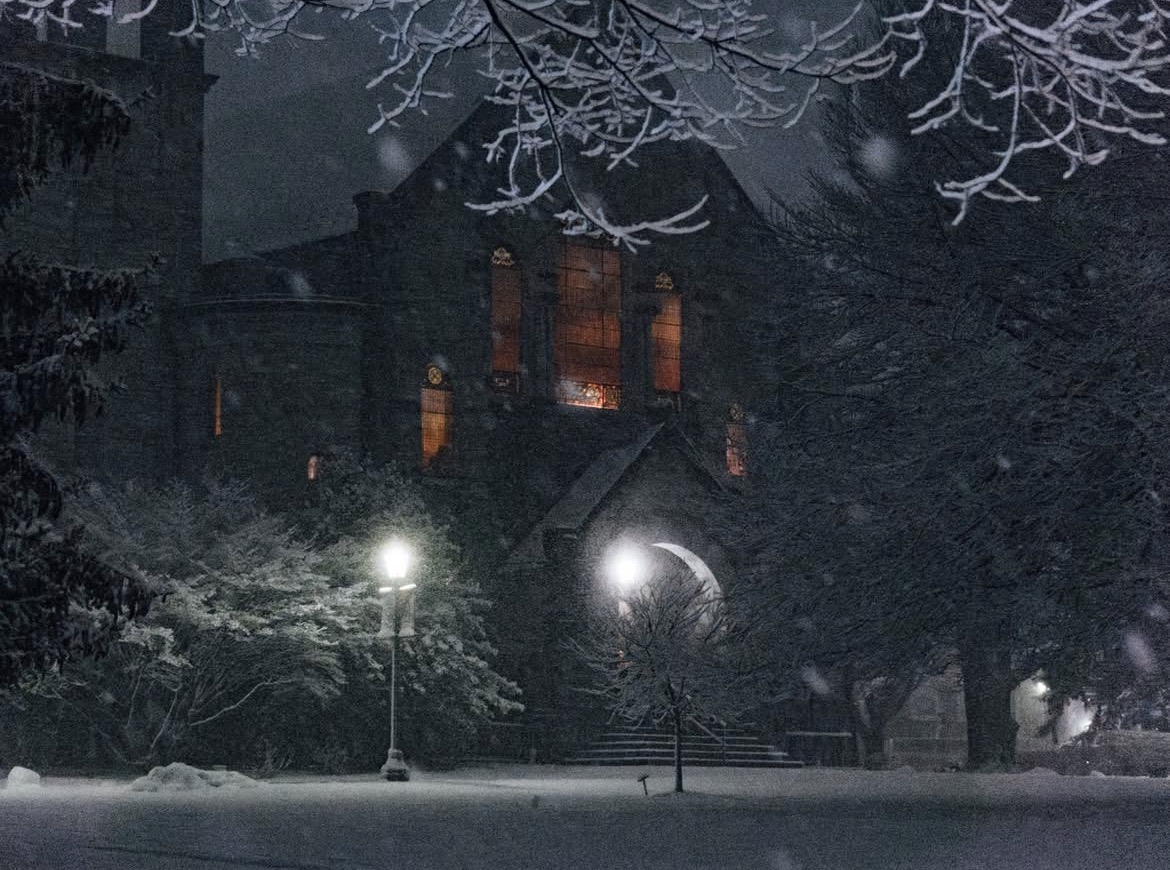
Ursinus College spring semester began as a winter wonderland. It also started early. Check-in was moved from Sunday, January 25 to Friday, January 23 forcing students to change and reevaluate their travel plans last-minute. Due to the weather, the first day of classes were also cancelled. For students, we got an extra day to stay inside, watch movies, and catch up with our friends after a long break. However, for our professors who worked hard on their syllabi, we were already falling behind!
While our snowy start was fun – full of sledding by the football field and snowmen on every lawn, the storms didn’t end there. On February 23, another snowstorm came, resulting in a remote learning day. Some professors took the opportunity to host classes on zoom while others decided to cancel class completely.
Dr. Ryan Walvoord from the Chemistry Department explained that, “There is no substitute for in-person learning. The pandemic made us a lot better on how to do asynchronous or virtual classes. But in my experience it still required follow up. I definitely prefer in-person class.” Dr. Walvoord wanted to make sure his students didn’t miss out on the important material scheduled for the day. He explained what he did to ensure that his students got the most out of their asynchronous day. “What I did was I drove in on Sunday right before the storm hit and I got all my stuff. I recorded an asynchronous class, made the worksheet and the answer key, and made sure the instructions were clear. I couldn’t cancel completely. There are students who wouldn’t want that and I don’t want that.”
It’s a hard decision to cancel class and it isn’t made lightly. Professors like Dr. Nathan Vogler, who canceled his Neuro 200 Research Methods class, had to weigh the benefits of having an online class versus moving the material to a different day.
Dr. Vogler says, “It creates challenges for us as instructors. Adjusting the schedule is not easy. The other thing I would add is that some classes are easier than others. For example, there are some lectures that would be relatively straightforward to charge to an online format. Neuro 200 is a discussion-based course where we all meet and have conversations in class. That’s harder to implement through zoom and remote learning. It depends on the material and the class.”
Dr. Erica Gorenberg of the Biology Department shares similar sentiments, “It’s stressful trying to figure out how to fit all of our material in fewer days.”
Snow days are a day of freedom for college students, but they can affect the families of our professors. Some professors have children that are home from school or daycare that now need to be watched. There are also many professors who don’t live close by and would have to travel through inclement weather to get to campus. “Since I commute to get here, it is something I worry about, like if we have a lot of snow and classes are not canceled, I worry about my ability to get here but I also know I have a lot of students who are commuters so I worry about them and their safety. I don’t ever want to force a student into a dangerous or uncomfortable situation,” Dr. Vogler explains.
There are many factors that go into the decisions made by faculty during snow days. At the end of the day, it is about creating the best learning experience for students. For some classes, like organic chemistry, constant practice is necessary to understand the content, even if the class is postponed. For other classes, this means proper in-class discussion and an adjusted schedule as opposed to a zoom class just to stay on track.
Residential students have the luxury of their dining hall, library, gym, and friends all within walking distance, which makes snow days a time to enjoy campus without class. Meanwhile, professors strain to readjust their schedules and accommodate their students.