After months of anticipation, Ursinus took a key step into its future this past Wednesday. The school named Dr. Gundolf Graml as president, six months after the departure of Robyn Hannigan. Graml had been serving as interim president.
In the wake of the change, members of the Ursinus Grizzly editorial staff met with Graml for an exclusive interview, discussing the future of the school amidst a period of turmoil. Here are some key takeaways.
APEX Is Likely To Continue In Full Force
One of the biggest changes over the past school year has been the implementation of APEX programming. The initiative focuses on providing professional experiences to Ursinus students in their respective career paths, and helping them establish connections in their fields. Graml beamed with pride as he discussed the program, given its growth over the past year.
“There are now so many people who have picked up the mantle of innovation, and are bringing new ideas to the table,” Graml said. “Faculty are taking this initial idea, and making it so much better, through new courses and new learning formats tied to APEX.”
It’s easy to see why Graml takes such pride in the program; he is credited as an integral part of its implementation. The president helped implement a similar program at Agnes Scott College where he worked previously, entitled the “SUMMIT” program, also looking to offer career preparation to liberal arts students. As APEX continues, however, he admitted he will take on a different role: promoting it to various donors.
“My role will be to ensure that [the teachers’] work will be visible off-campus,” he said. “Visible to those who want to support colleges, like philanthropists, grant agencies, and foundations.”
Given the recent financial woes of the school, Graml sees APEX as essential to making Ursinus stand out among other liberal arts schools. Attendance at liberal arts schools has decreased across the country, just as college enrollment continues to decline (2.7 million fewer students than at the start of the decade, per NPR).
“In 2026 and beyond, the world needs more liberal arts graduates who are critical thinkers and good communicators,” Graml said. “With APEX, we can tell that story.”
The School’s Relationship with AI Continues To Evolve
Graml believes that Ursinus’s approach to this technology can help students feel confident in their majors.
“If I’m in a room with someone talking about AI taking away entry level jobs, I can tell a story about APEX that says our students have this repeated engagement with the world of work, develop an entrepreneurial mindset, and we are not steering students away from areas that are considered to be less relevant for a job,” Graml said.
Through the implementation of experiences that allow students to gain familiarity with their chosen career path, the president has faith in the viability of all of the school’s majors, even those affected by the presence of A.I.
“Those degrees that don’t have an automatic line to a job because they’re not in business or they are not in engineering, we will need them,” Graml said. “You can create the job that you need and you can connect it with these other areas.”
The president was also quick to emphasize, however, that the school would continue exploring the usage of AI as a tool. Ursinus recently added a minor in Artificial Intelligence, described on the Ursinus website as an opportunity to “explore the underlying technology that enables Artificial Intelligence, potential policies for deploying AI responsibly, and authentic use cases for stakeholder-based designs and solutions.”
“We have to engage with it in the same critical fashion we engage with everything else,” Graml said. “We want to deploy it in the classroom based on a professor’s expertise around a subject matter, such that students know how to use it, but don’t outsource their thinking and their work to it.”
The school plans to explore the tool with a cautious curiosity, open to whatever direction it takes them.
Financial Questions Remain At The Forefront
The biggest question for Ursinus continues to be viability financially. The Grizzly reported back in February that the school was looking to cut $10 million in operating costs over the next three years. Graml referenced the aforementioned decrease in college interest as a serious factor, limiting the school’s opportunities for growth.
“The painful realization this year was that, in a world that is shaped by demographic development, there’s fewer [students] around to join colleges,” he said. “We look at our mission, we look at our values, we look at our academic outcomes that we want to achieve, and then say, ‘How can we support this in the most responsible and efficient manner?’”
Measures like staff/program cuts, and the switching of cleaning companies have been used to cut costs. Graml stressed that the school faces a variety of different pressures, leading to the series of decisions this February.
“We can’t just ask [students] for more tuition money, because we know that’s difficult,” he said. “We then want to support the people who work here, in a reasonable way to pay their bills.”
The key, in the president’s eyes, is effective communication between staff, students, and administration.
“My desire is really to be in constant communication, to have open dialogue with faculty and staff, and also look for the ways where a shared governance process can lead to shared solutions,” Graml said. “The pressures that the world creates, cannot be solved when people within the institution negotiate against each other.”
By working together with faculty, he hopes the school can reach new heights.
“We need to come together and tap the wisdom that exists in a place like this, and try to unleash it so that it can help with problem-solving,” Graml said.
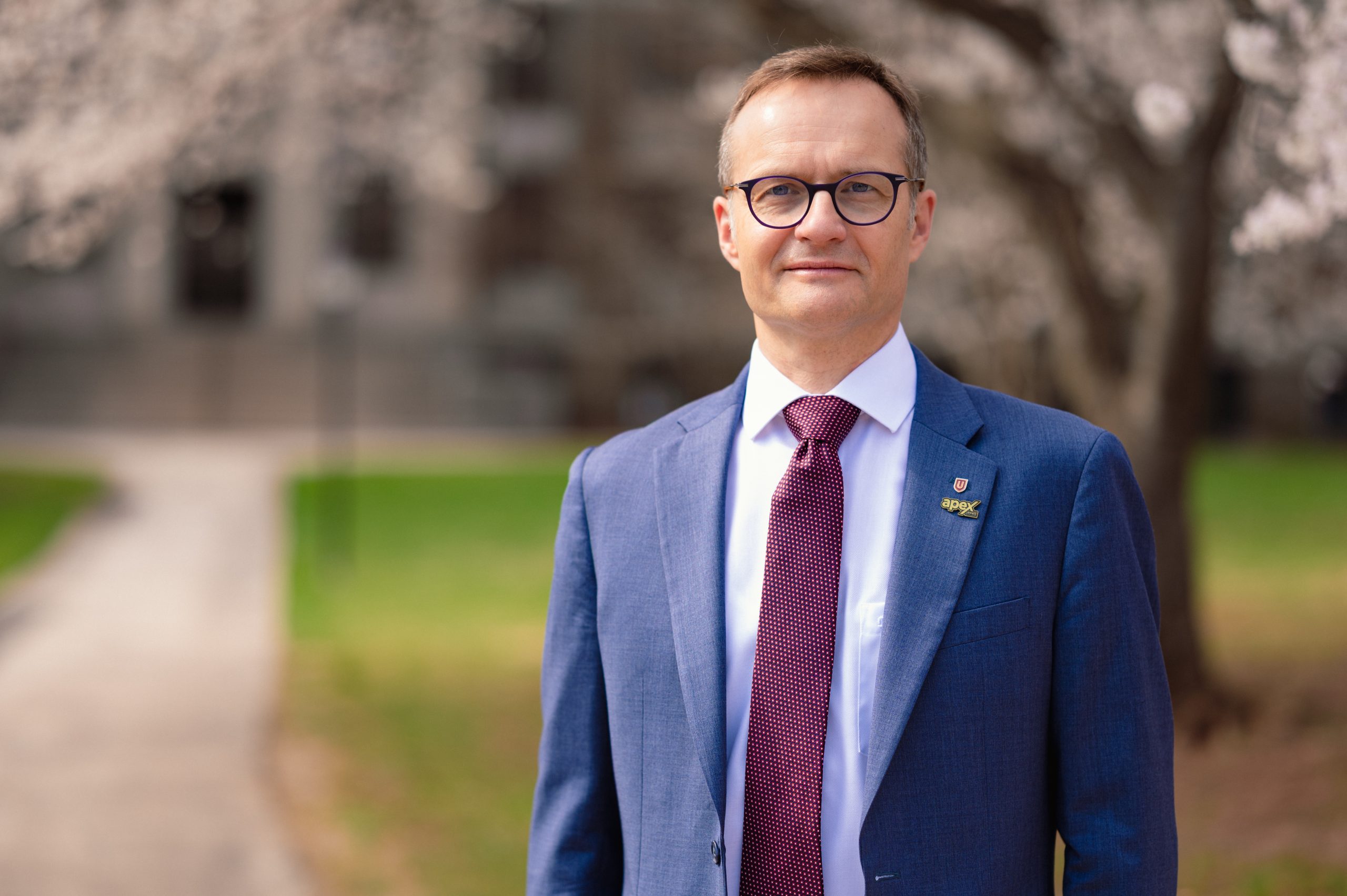
Graml Announced as President
More from NewsMore posts in News »